So I’ve been reading a lot of Rumi lately and I’m starting to wonder if he was on the twin flame journey himself maybe? The way he writes about love that exists without physical presence, it reads like someone who lived it. Or at least was very familiar with it. It was a random shower thought, but I can’t stop seeing it in his work.
The merging stuff, losing yourself to find yourself-that’s what happens with all the shadow work and intensity of this connection. His words feel like those of someone whose whole sense of self fell apart and came back together.
He talks about love without needing to hold on so tight. Real connection not requiring possession or even being near each other. Still working on that one. Probably will be for a while lol
Confused by the runner-chaser dynamic? Get clarity with your personalized Twin Flame reading. Unlimited Tarot spreads to dig into your twin flame journey.
My own twin is actually Persian and doesn’t like the translation of Rumi in English because the literal translations really don’t work.
They become bland platitudes compared to the original.
The original poetry really sounds like the journey, but the English translation is… lost at best. I tried reading some of his poetry in English, but a lot of it is like reading the Quran. I know a lot of people ascribe him to Christianity because they read ‘God’ but he was a Muslim.
The Rumi and Shams story has to be at least similar. I don’t think they’re really mentioned as the origins of twin flames but there is a lot of overlap and it would make sense.
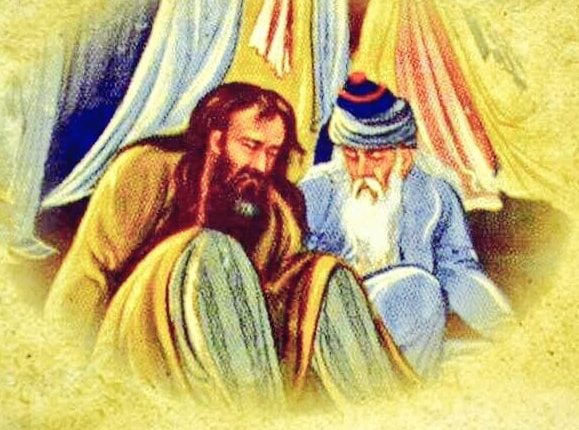
Rumi was this established scholar and teacher in Konya, in his head with books and theology. Then in 1244 this wandering dervish Shams of Tabriz shows up and their meeting is described as a ‘spiritual explosion.’ How is that not straight from the signs of meeting your TF thread?
Shams challenged everything Rumi believed. Threw his books in a pond and within days Rumi went from academic to mystic poet. That kind of complete transformation from meeting one person.
Yeah.. the more I think about it the more I wonder why I haven’t seen it mentioned before.
They spent months in seclusion together just talking. Deep mystical conversation. And when Shams disappeared the first time so… separation (his students were jealous of their connection), Rumi was devastated. Wrote him letters begging him to return.
Shams came back but left again in 1248, some say he was murdered. Rumi searched for him for months in Damascus until he had this realization that they were one, that Shams was inside him (inner union). It isn’t a happy twin flame success story, but there are a lot of patterns there. And a lot of the wording from his writing really sounds like a lot of the same practices we use today.
He wrote like 70,000 verses after that. Named his entire collected works after Shams. Even signed Shams’ name instead of his own at the end of poems. Scholars say his ‘annihilation of his separate self’ was so intense that he saw Shams everywhere and in everything.
Their whole relationship was about dissolving the boundaries between lover and beloved. Scholars actually say it’s impossible to tell in a lot of Rumi’s poetry whether he’s addressing Shams the person or the Divine. In Sufi tradition, ‘lover’ means lover of God specifically. So when he writes about love it operates on both levels simultaneously - human connection and divine connection are the same thing.
Rumi described love as a force that ‘makes the seas boil, crushes mountains into sand.’ Something that transforms everything it touches. And relevant to what you’re saying about not holding on, he wrote that the Beloved is living while the lover is dead. It’s about letting go of the separate self.
After Shams disappeared, Rumi didn’t just grieve. He wrote an entire collection of over 40,000 lines called the Divan-i Shams dedicated to him. He wrote as if he and Shams were the same person. Some people talk about the idea of inner union, and for some, it’s a step before reaching a physical union with their TF, but others believe it is their final destination.
Personally I think this idea of “inner union” is just the end stages of your surrender stage and that’s why we have so many people gatekeeping the TF community because they can’t get beyond that stage so they start telling other people that they can’t possibly reach a physical union with their twin either.
I don’t think one is better than the other… I think maybe Rumi was a twin flame but it doesn’t mean other twins can’t be in physical union.
Honestly, I think the real connection lives in his poetry itself. His words still carry whatever love he experienced, and every time we read them we’re somehow in its presence.
His story is really worth reading if you haven’t. The fact that he and Shams were both men living in 13th century Persia makes his experience feel even more notable to me.
The whole idea of ‘inner union’ was the story being changed because Shams was also biologically male, and that doesn’t fly with Islamic tradition, so no, he couldn’t possibly be attracted to men… it must be his “inner self”.
Don’t let more modern religions mess with the real meaning. To me, they were both twin flames. The journey doesn’t care about biology or gender and maybe they were in reunion but that story was changed later by Islam.
I use Sufi breathwork and heart-centered zikr practices in my healing routine alongside my usual EMDR sessions. Helpful for processing the triggers my TF brought up. Something about the rhythmic breathing also seems to trigger downloads quite often.
For anyone wanting to go deeper, I’d recommend the Masnavi (his six-volume spiritual epic) over the popular quote collections. Book 3 especially has passages about ‘the Friend’ that read like detailed TF stage descriptions. Rumi’s son (Sultan Walad) wrote accounts of the Shams connection, too.
I’ve been jotting down specific verses that match up with different process phases in my own notebook. Basically, a cross-reference between his poetry and the awakening/separation/surrender stages.
Ohhh, this makes my heart so happy When I first started my TF path, I randomly picked up a Rumi book at a thrift store, and it literally fell open to a page that said ‘what you seek is seeking you’ - I got full body chills because I had just been crying about wondering if my twin even thought about me!
I like to read Rumi during difficult moments (plenty of tears on the pages) because it feels like he truly understands.
My TF is Muslim and I’m Christian, and we’ve been reading Rumi together. His mysticism feels like sacred neutral ground for us - somewhere outside the religious boxes our families put us in.
 see what you mean.
 When I first started my TF path, I randomly picked up a Rumi book at a thrift store, and it literally fell open to a page that said ‘what you seek is seeking you’ - I got full body chills because I had just been crying about wondering if my twin even thought about me!